
 International
  Politics
  Local
Local  Finance
  Sports
  Entertainment
  Lifestyle
  Technology
  Literature
  Science
  Health
  11 months ago
37
11 months ago
37
SO MANY memorable queer characters on-screen have stolen our hearts. 💕
Film at Lincoln Center / Via giphy.com
Their romance was goals for everyone, not just the queer community.
However, some of our favorite movies had the most cliché queer tropes, which we all got tired of watching on repeat. But things are slowly changing for the better in the 21st century, and although it is slow progress, we are very happy to see it happen.
To reminisce, I have compiled a list of clichés around LGBTQ+ characters that are ignorant, far from reality, and honestly an offense to the entire queer community. Here are 12 old-fashioned queer tropes that fans are excited to say bye-bye to:
1. The gay best friend is extremely outdated, and we are glad to see it go away — slowly but surely!
20th Century Fox Entertainment / Via giphy.com
I think I can speak for everyone when I say this trope is old. Why must it be the gay best friends who have to sit and listen to the woes of the main character (who honestly ends up being the most bratty character, making awful decisions)?
It is not as though they do not have enough problems of their own, like fighting for equal rights and being recognized in some countries! Like, come on, Andrea, Nigel has to move up the ladder of corporate success — give him some space!
2. Queer individuals are either in toxic relationships or dying to be in a relationship — there is no in-between.
Giphy/HBOMax / Via giphy.com
It seems like in the fairytale land of Hollywood, queer individuals are either in toxic relationships, jumping in and out of relationships, or striving to be in a relationship.
Some examples of toxic queer relationships are Elio and Oliver in Call Me By Your Name, Rue and Jules from Euphoria, Kurt and Blaine from Glee, and the list goes on and on. But you get my point.
In contrast to this, seeing a healthy and compatible couple like Mitch and Cameron from Modern Family was a refreshing sight. And it is a step towards improved writing for queer couples.
3. We no longer want to see queer couples dying on us— we want them to live to be 100.
Giphy / Via giphy.com
I just have one question for this film's director and writer: WHY? I know audiences love a good romantic drama, but why is it always at the expense of wholesome queer couples and characters?
Brokeback Mountain made me lose faith in love and all kinds of relationships in life.
You'd better not do this to us again, Hollywood.
4. Lesbians are not predatory, cold, and distant — and it's time Hollywood accepted that!
Giphy / Via giphy.com
In many TV shows and movies, lesbians are often portrayed as cold, uptight, or 'predatory,' like Mila Kunis' character in Black Swan or Villanelle in Killing Eve who is shown as dangerously obsessed with Eve.
I think writers get confused between a guarded and secure woman and a brooding and emotionally unavailable woman — which ends with female characters who never explain why they cannot love their partner.
I love Rosa Diaz, and I think her character should be a template for writers when it comes to writing straight, bi, and lesbian characters.
5. Movies having queer characters as ornaments in a film for inclusivity.
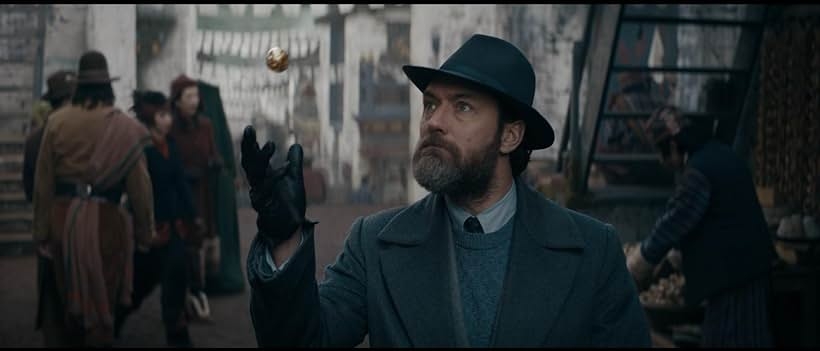
Warner Bros / Via imdb.com
Okay, showing Dumbledore having a romantic tiff with Grindelwald threw me off majorly. It was highly unnecessary, which is why I hate this trope the most.
A lot of films want to appeal to the younger audiences, and the way to do so is through diversity and inclusivity. And thus, they include a couple of gay or lesbian characters to show 'support' to the community. But that's that.
No real character development, no complex emotions, no characteristics, nothing. It's like having a queer character in the film is just an ornament to make the film prettier. And that's downright offensive.
Aren't we glad we're kind of done with this? Yes, we are.
6. When the creepiest villains have queer mannerisms simply because they get obsessed with the protagonist?
Giphy/James Bond / Via giphy.com
There are a few villains who are deemed charming, intelligent, and a bit too suave for their own liking—and audiences can tell that there is a hint of queerness to these villains who are obsessed with the protagonists — making them alluring but also creepy.
And I'll tell you why I don't like this trope: it attaches queer individuals to evil and creepy, which is a gross misrepresentation.
Silva from Skyfall, Hannibal from Hannibal, Lestat from Interview With A Vampire, and Moriarty from Sherlock Holmes are some examples.
I mean, straight villains are also obsessed with heroes; take Thanos, for instance. That guy never gave the Avengers a break.
7. When queer love and drama happen only in flashbacks, with no mention of it in the present.
Regal Movies/Giphy / Via giphy.com
When a film’s lead is queer, them being queer is either the entire plot — hyper-focused and dramatic — or it’s buried in their backstory, never shown or explored onscreen. There’s rarely an in-between.
Like any other love story, we want to see all the aspects of the love life a queer character has. The highs AND the lows.
We have seen this in films like The Imitation Game, Rocketman, and Bohemian Rhapsody. Their love life is present only in flashbacks, like it is unimportant or does not add to their story.
However, the tide is changing with the show Fellow Travelers and how it maps out Tim and Hawk's relationship. AND IT'S ABOUT DAMN TIME!
8. The closeted bully who physically attacks others because of his inability to accept his sexuality.
20th Century Fox / Via imdb.com
This is probably the MOST used queer trope in films, and honestly, we are done with this. Dave physically hurting and abusing Kurt in Glee because of his homophobia must be condemned.
Men exploring their sexuality deserve more sensitive, nuanced portrayals than simply depicting them as bullies. While it's a real experience for some, this trope often reinforces harmful ideas about masculinity and queerness rather than challenging them.
Adam from Sex Education is a better portrayal of someone understanding their sexuality, and we need more of it — ASAP.
9. Gay men who turn away from true love and marry a woman.
Giphy / Via giphy.com
I've seen this trope too many times, and honestly I've grown tired of it. Why show us such fabulous chemistry between two hot individuals — only to have them turn away and marry the opposite gender? We're glad this is the stuff of the past (ish).
Queer couples deserve happy endings!
10. When coming out was used as a plot device to make the show interesting rather than inspirational.
Warner Channel / Via giphy.com
We love seeing more queer representation in films and TV shows — except for when it is used as a plot device and the writers did not even try.
Cheryl coming out as gay and having a relationship with Toni in Riverdale was great; but if it wasn't blatantly obvious, it was purely meant as a turn in the obviously bad series to make it better.
This has changed for the better now, with films like Love, Simon, and shows like Heartstopper, which are actually inspiring for the younger generations and not used as a tool to increase viewership.
With more queer-centered shows and movies coming out, I think we can safely put this irritating trope behind us for good!
11. Portraying queer individuals as promiscuous and flirty.
Giphy / Via giphy.com
This trope is completely based on degrading stereotypes of the queer community, and I WILL NOT STAND FOR IT.
With characters like Connor from How to Get Away With Murder, queer individuals are portrayed as the wild party crew — flirty and all about hooking up. However, with shows like Heartstopper and Sex Education, this narrative is slowly fading, we shift from hooking up to deep and slow love. And we love to see this.
I cannot get enough of Matt Bomer and Jonathan Bailey's love in Fellow Travelers. They are the definition of yearning.
12. The once hyped 'girl-on-girl' action for the male gaze — which has now shifted for the female gaze!
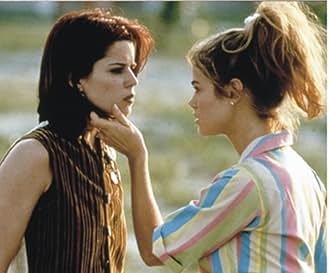
Mandalay Entertainment / Via imdb.com
Men often hype up the girl-on-girl trope in films...any guesses why?
These scenes are crafted for the male gaze, reducing lesbian relationships to just a physical spectacle with zero emotional depth. It's sickening to see ATP.
Wild Things is a prime example—over-sexualized leads, no real connection, just fan service.
But lucky for us, since then, filmmakers have grown to portray mature relationships between women— like Carol, which was oozing yearning and sexual tension, or A Portrait of a Lady on Fire, which was for the female gaze from start to finish — all done the right way.








 English (US)