
 International
  Politics
  Local
Local  Finance
  Sports
  Entertainment
  Lifestyle
  Technology
  Literature
  Science
  Health
  11 months ago
44
11 months ago
44
It took 36 years for Top Gun: Maverick to be made!
Blade Runner? Avatar? Top Gun? These film franchises are historic for having their sequel films released years, sometimes decades, after the original. Nevertheless, they've managed to capture audiences each and every time, no matter the time between them. So, let's take a look at these 17 movie sequels that came out waaaaaaay after the originals.
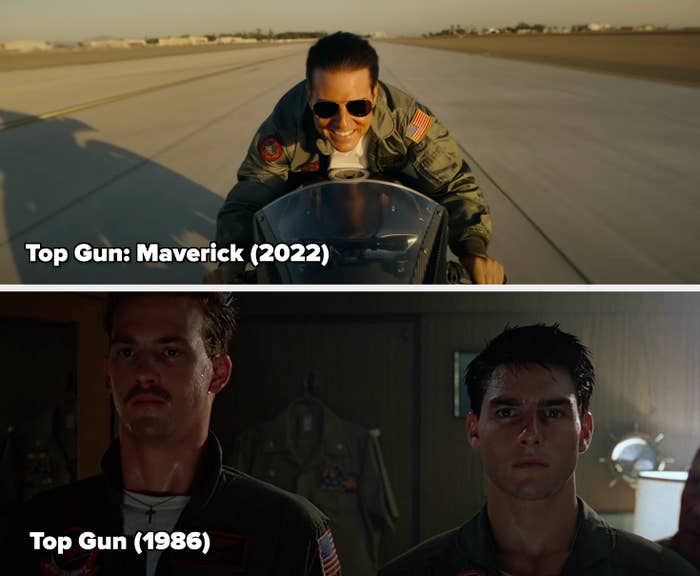
1. Top Gun: Maverick came out 36 years after the original Top Gun was released back in 1986.
Paramount Pictures / Via youtube.com youtube.com
Despite the original Top Gun being released back in 1986, it took nearly 36 years to make Top Gun: Maverick. This was due to the fact that the film was post-poned and shelved multiple times before coming into development due to various conflicts that arose over time, such as fundings and investments being pulled, essential crew members falling through, and the desire to make a relevant, intriguing story to pull back in diehard Top Gun fanatics and to branch out to among other audiences.
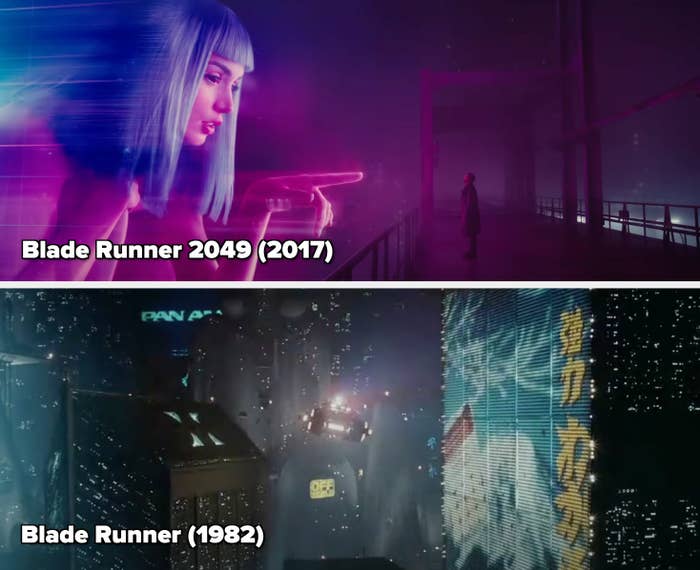
2. Similarly, Blade Runner 2049 came out 35 years after the original Blade Runner was released back in 1982.
Columbia Pictures / Via youtube.com youtube.com
Development on Blade Runner 2049 dates all the way back to 1999 (still 17 years after), yet was halted various times due to director Ridley Scott's unavailability to direct the sequel, licensing issues, and creating a captivating story to follow the beloved original. While he passed on the job at first, Denis Villeneuve eventually stepped up to take on the sequel to Blade Runner. At the time he was approached around 2015, Villeneuve had just finished his film Sicario and was already beginning production of the 2016 sci-fi thriller, Arrival. Yet, after intense schedule arrangements, Villeneuve reconsidered and Blade Runner 2049 made its way out into the universe in 2017.
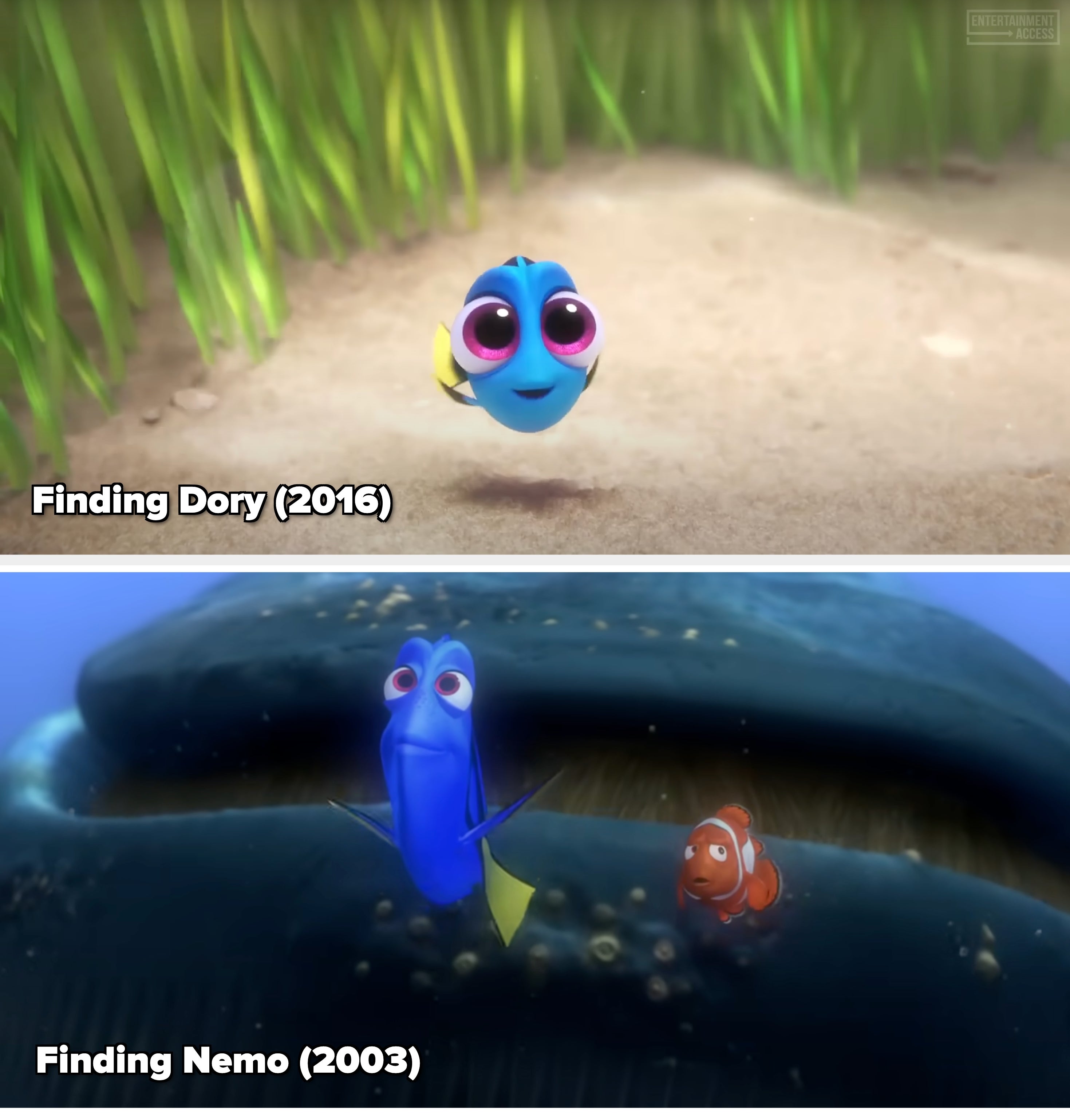
3. Finding Dory came out 13 years after Finding Nemo, which released in 2003.
Pixar Animation Studios / Via youtube.com youtube.com
The delay in making Finding Dory, which was released in 2016 and 13 years after Finding Nemo, was mostly due to story structure and the struggles of centering a film around the initial side-character, Dory. Director Andrew Stanton understood this challenge, but spoke about creating a story around Dory. He stated, "She was built to be a side character. She was built to be the best sidekick and the comedic foil for a whole movie. When you're the main character of a picture, it means you have to be the character with the big problem that everybody has to be emotionally invested in and has to have things at stake, and so they just invariably end up having to be a little bit more serious. So, the tough part was, 'How do we make Dory even remember that she has issues and that she's changing?" After establishing the story, it took around two years to complete the animation, which is why the film took so long to be made.
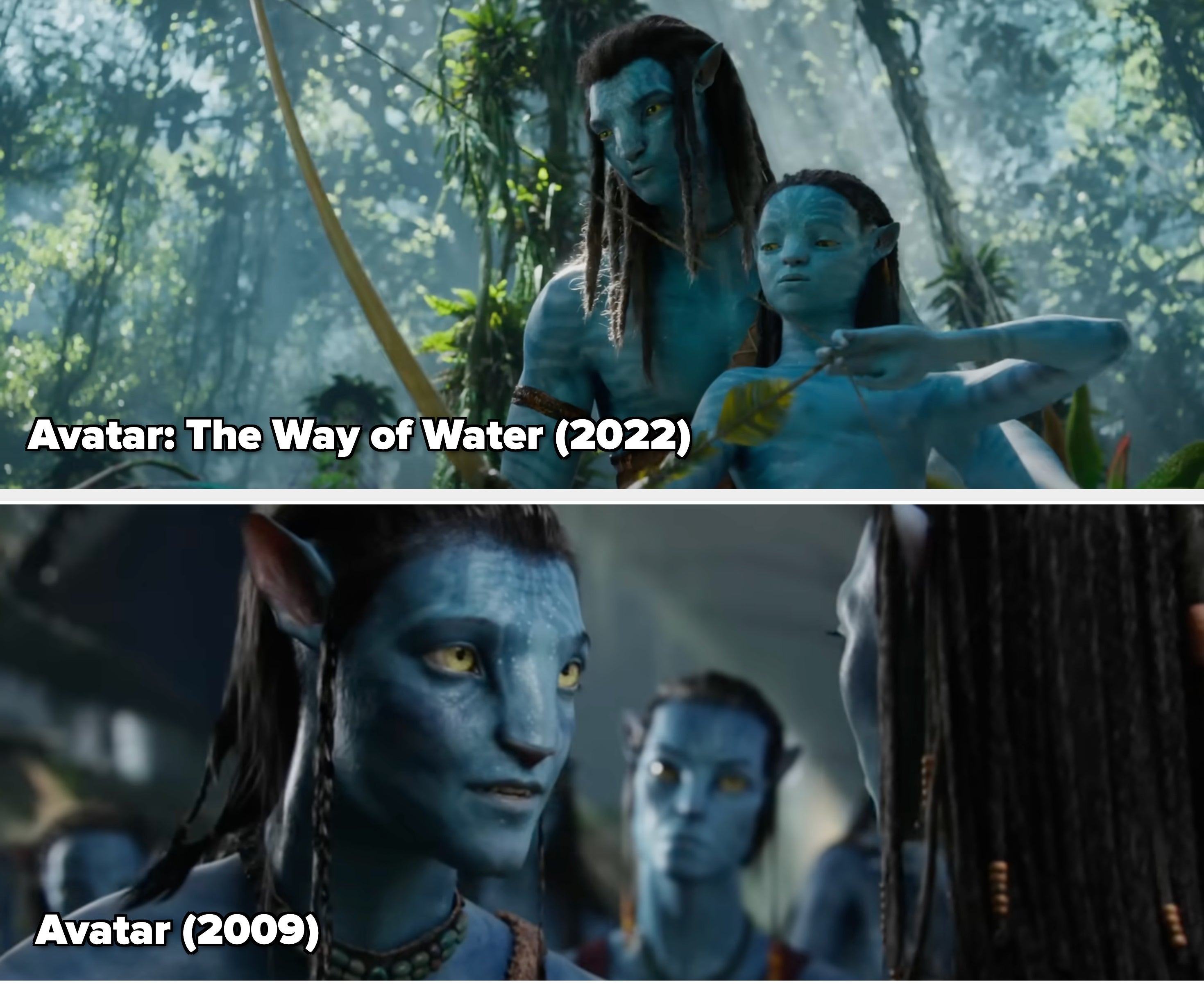
4. Avatar: The Way of Water was also released 13 years after the original Avatar in 2009.
20th Century Studios / Via youtube.com youtube.com
Avatar: The Way of Water was released a long time after the original Avatar due to the business of director James Cameron's schedule, the need for increased story development, and the fact that Avatar was originally meant to be a trilogy, not a five-film franchise. Once decided, Cameron explained that it took him four years to write the other four movies, another challenge added in the midst of making the sequel. He also shared how he had to invest in new underwater tech to enhance the reality of the Avatar world, which also took a considerable amount of time. Lastly, filming the actual sequel, Avatar: The Way of Water took three years itself, making it very easy to understand how it took nearly 13 years for the film to release following the original.
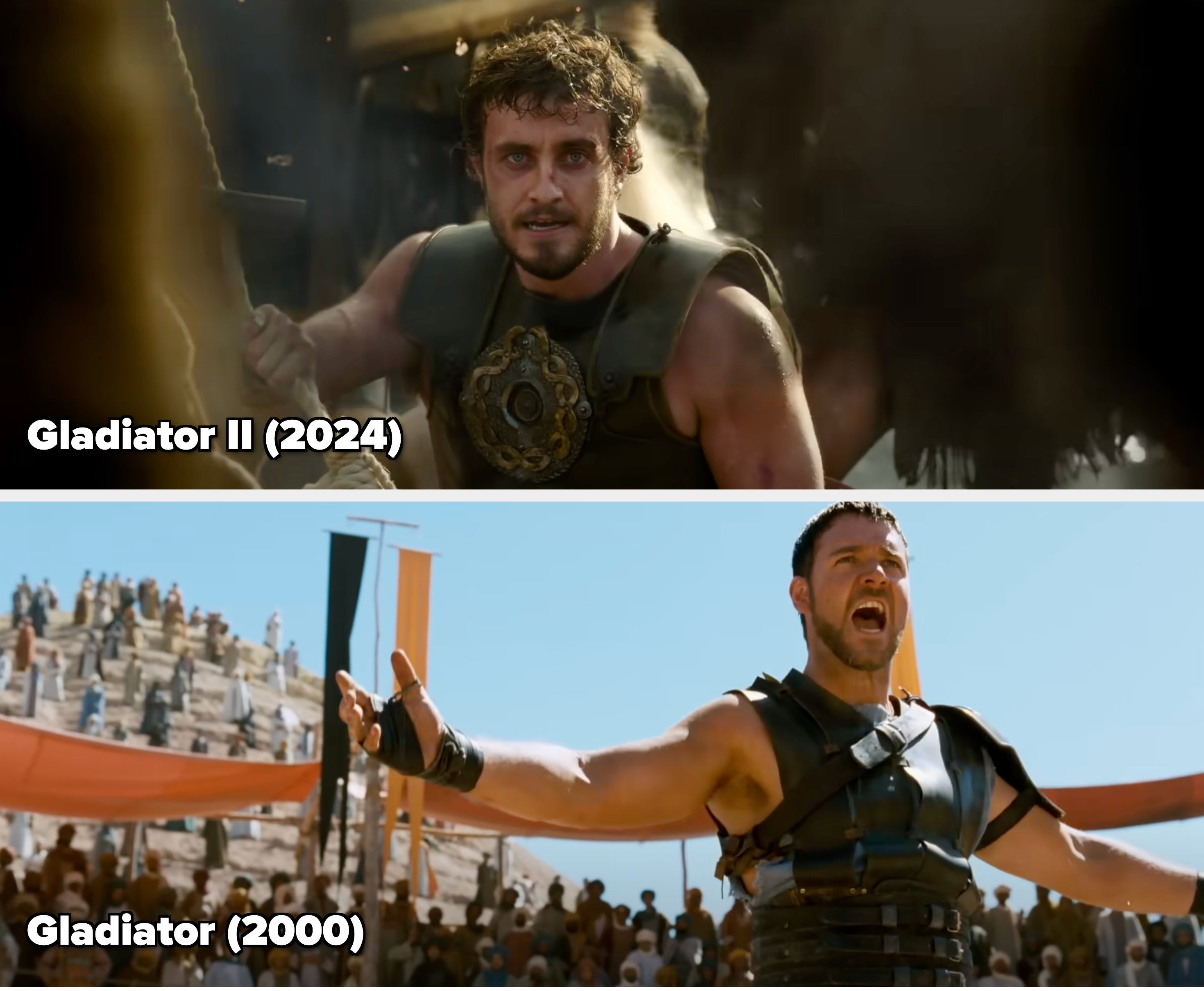
5. Gladiator II came out 24 years after the original Best Picture winner, Gladiator, in 2000.
Paramount Pictures / Via youtube.com youtube.com
Despite director Ridley Scott announcing the finished script for the sequel to Gladiator back in 2003, things fell apart quickly when DreamWorks sold its live-action library over to Paramount Pictures in 2006. After that, there wasn't any news on the progress or development of Gladiator II until around 2017 when Scott shared he'd found a way in the story to bring back Russell Crowe, who famously portrayed Maximus Aurelius. Then, it was announced in 2018 by Paramount that the sequel was officially in development, but surrounding Lucius, the son of Maximus, instead. Filming began in 2023 with Paul Mescal as the lead, yet with an on-set accident and the raging Screen Actors Guild strike, production didn't kick back up until the very end of 2023. However, with a fast-filming schedule behind Scott and his crew, Gladiator II was released in the fall of 2024, 24 years after the original film.
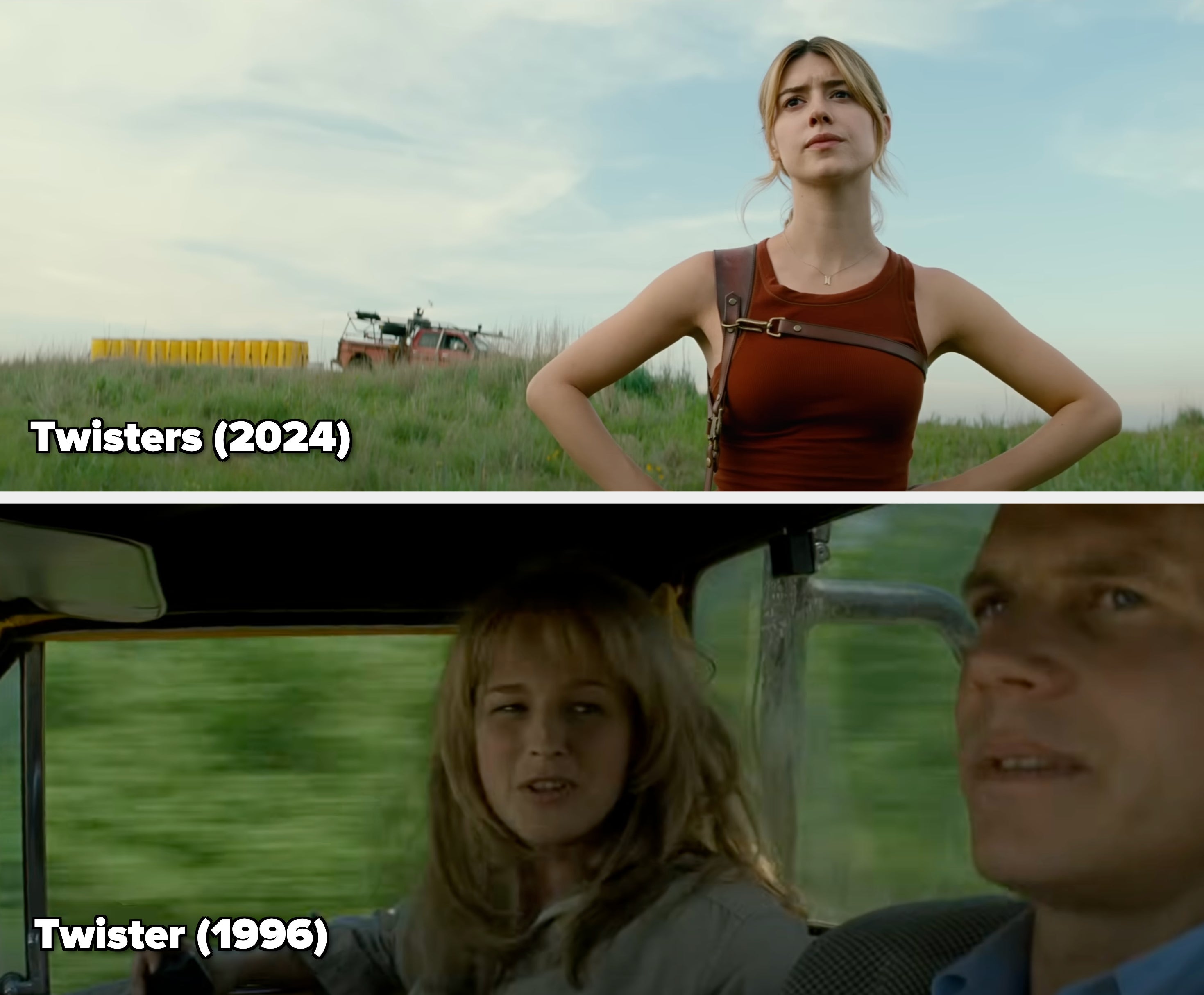
6. Twisters was a stand-alone sequel that came out 28 years after the original 1996 Twister film.
Universal Pictures / Via youtube.com youtube.com
The Twisters sequel never actually went into development in 2020 and wasn't officially announced until 2022. There wasn't any real reason for the delay other than taking the time to find the right story and director to take on the sequel. Helen Hunt, original star of the 1996 Twister, had even pitched her own idea for a sequel that she'd hope to direct following her character through more storm-chasing adventures, but was ultimately rejected by Universal. However, the film came to fruition and was released in July of 2024 with director Lee Isaac Chung, over 28 years after the original.
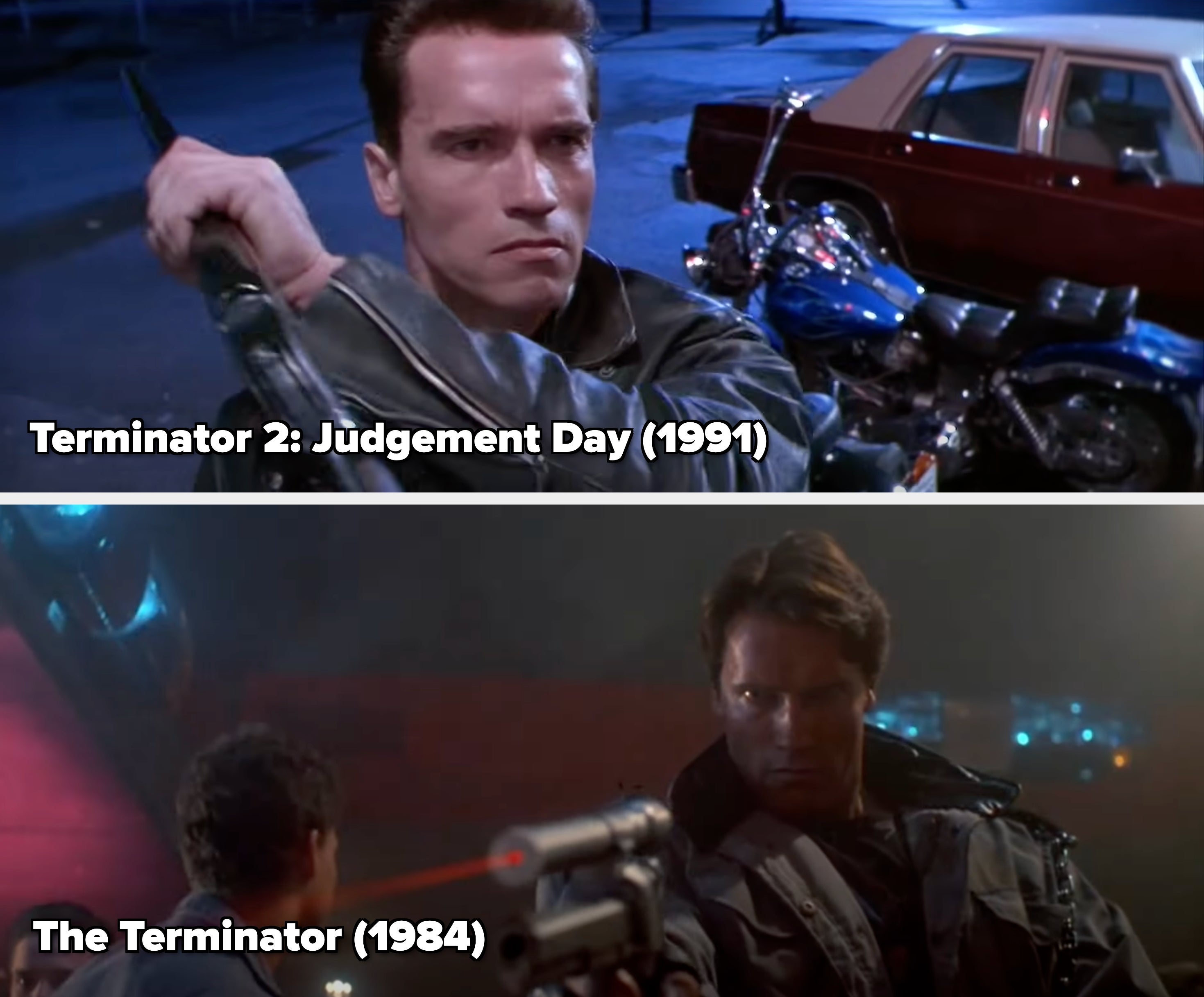
7. Terminator 2: Judgement Day came out 7 years after the original Terminator film in 1984.
Lightstorm Entertainment / Via youtube.com youtube.com
Terminator 2: Judgement Day suffered many financial struggles, a lack of interest, ownership issues, and technological issues in developing as a sequel to The Terminator. There were various limitations on the technology and visual effects needed for the film, as well as multiple production, financial, and ownership delays that caused the seven-year gap between the two Terminator films.
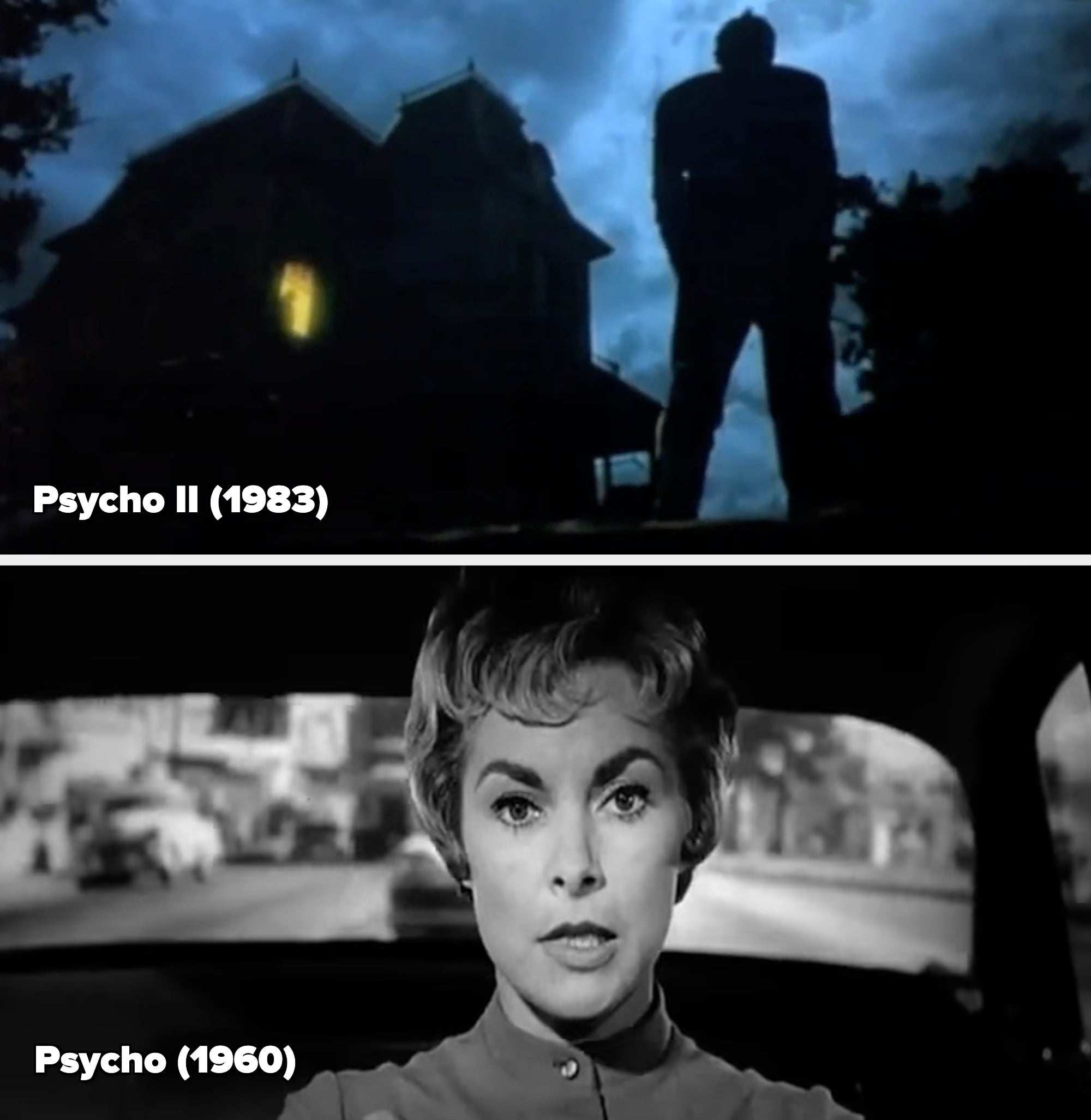
8. Psycho II was released 23 years after the original 1960 Psycho directed by Alfred Hitchcock.
Paramount / Via youtube.com youtube.com
The delay behind the sequel to Psycho seemed to be nothing more than making time for the story development, establishing a promising tone following the original, and to follow the agreement between Universal Pictures and Oak Media to finance and develop four films, one of which was Psycho II. However, the idea of sequels wasn't immensely popular in this time of Hollywood, which is another reason why it took 23 years for the sequel to Psycho to even be brought to life.
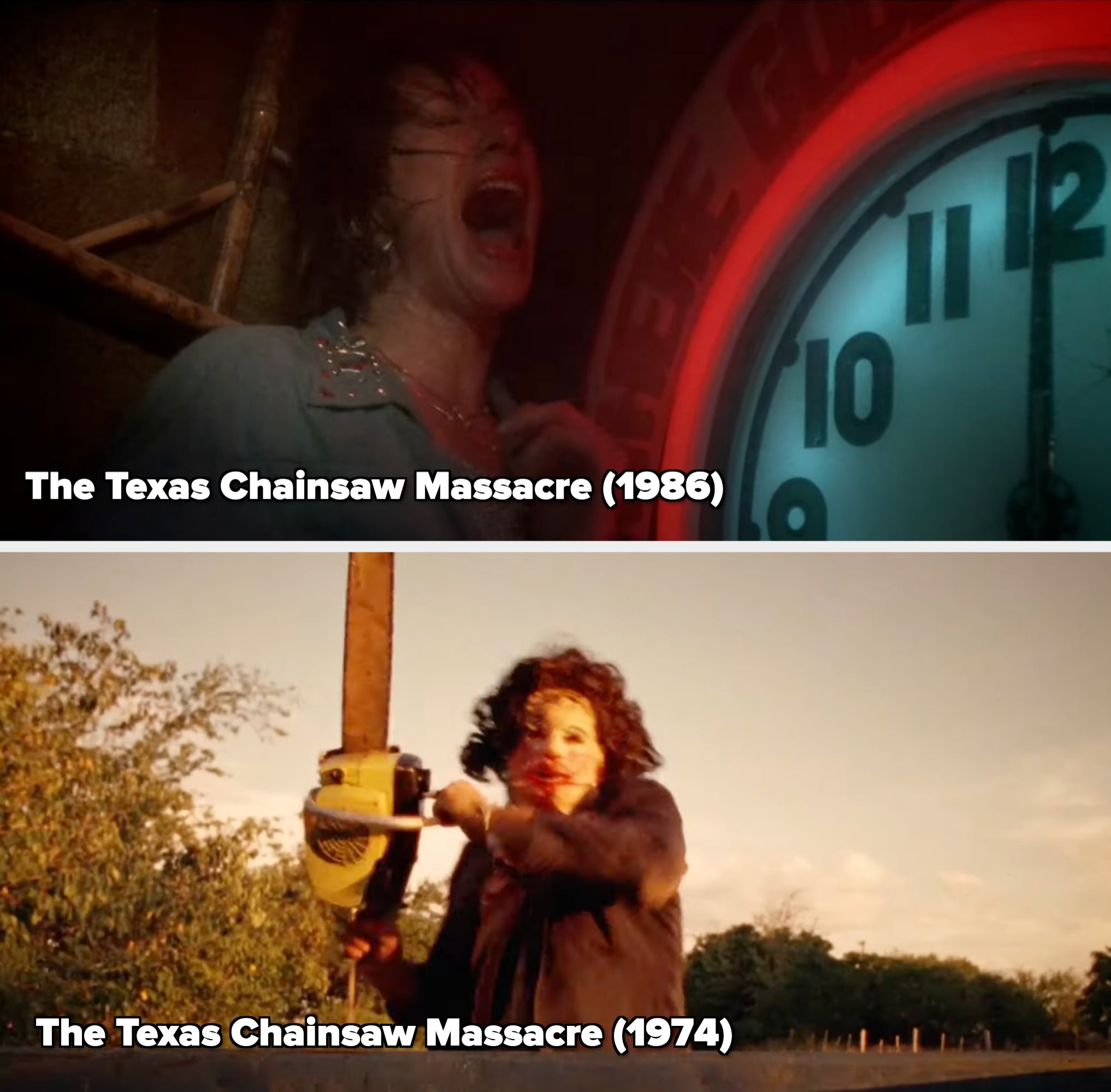
9. The Texas Chainsaw Massacre II came out 12 years after the first 1974 Texas Chainsaw Massacre film.
Vortex / Via youtube.com youtube.com
The Texas Chainsaw Massacre looked to be a promising franchise after the immense success of the first film installment of the same title. While it took nearly 12 years to create the second film and sequel, it was primarily due to the first film's great success, popularity, and reception. Director Tobe Hopper also wanted to explore other creative avenues with the Texas Chainsaw franchise, which added to the delay of the sequel film as well.
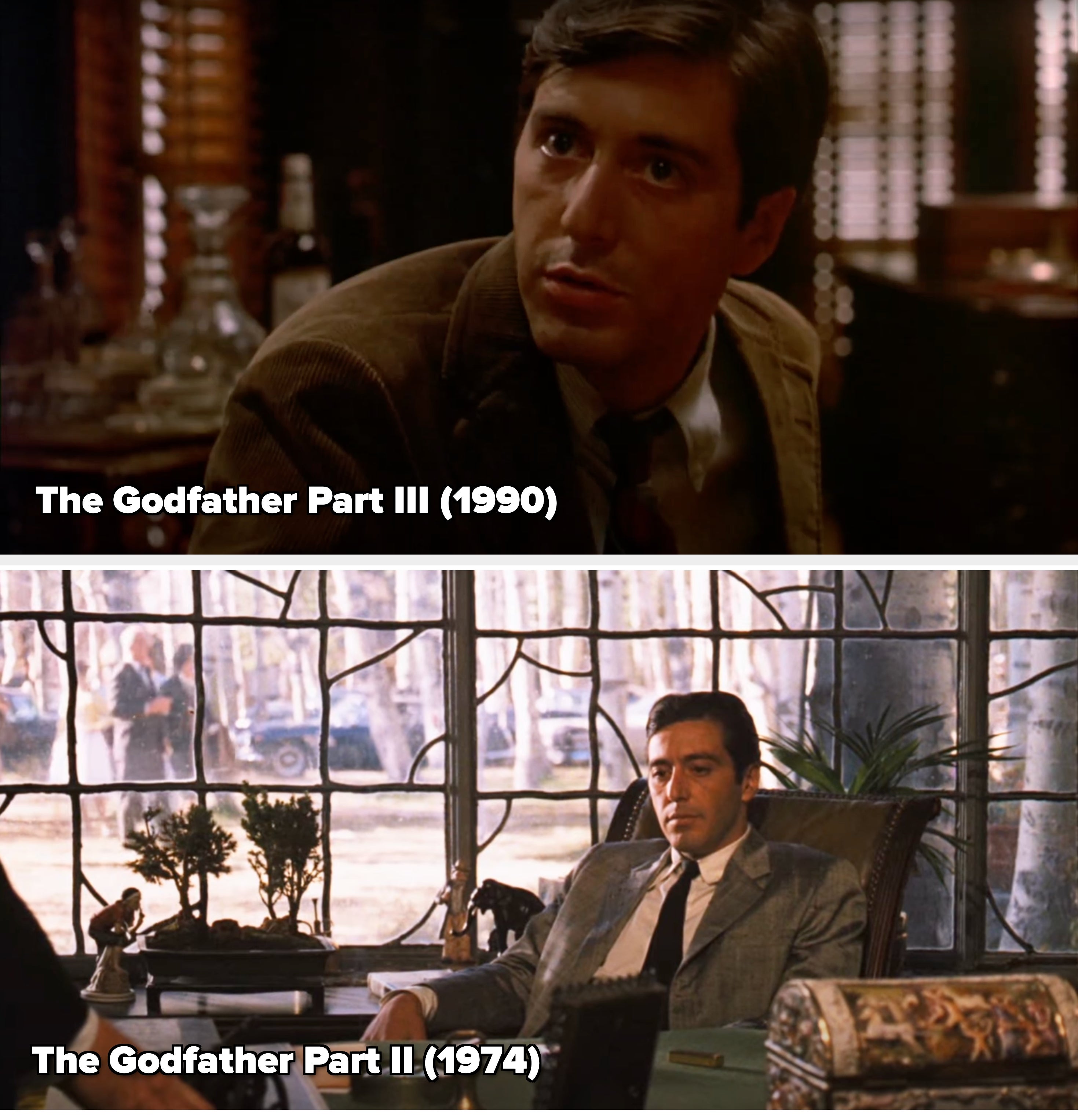
10. The Godfather Part III came out 16 years after The Godfather Part II, despite Part II coming out two years after the original Godfather film.
Paramount Pictures / Via youtube.com youtube.com
After The Godfather Part II was released in 1974, director Francis Ford Coppola felt at peace with the finish of the Corleone story and felt he didn't need to make another film. Yet, after some of his next films failed financially, Coppola decided to re-enter the world of The Godfather upon an offer he couldn't refuse. Eventually, Coppola banded back together with past crew members to develop the story for the third Godfather film, which was finished and released nearly 16 years after the second installment in 1990.
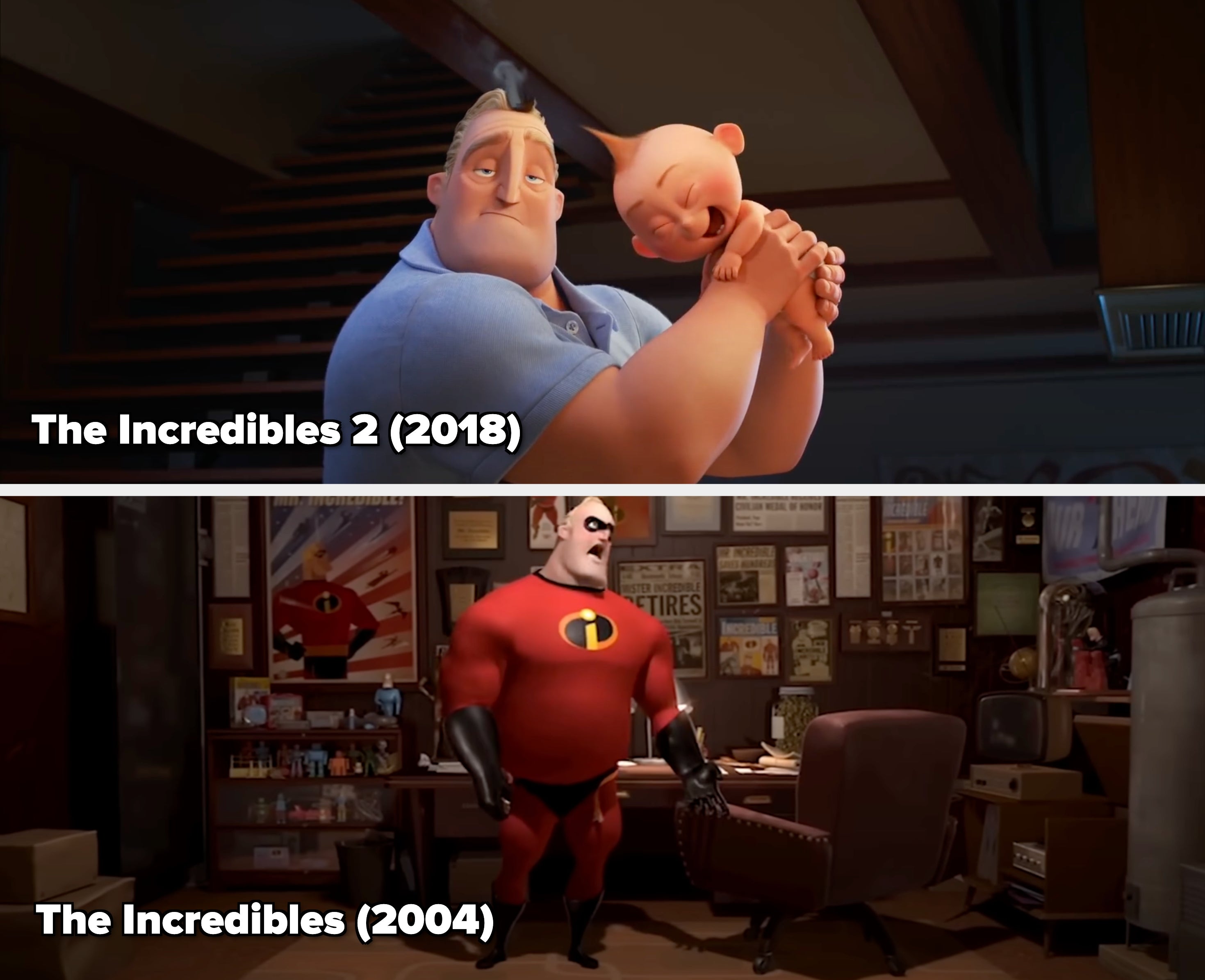
11. Similarly, Incredibles 2 was released 14 years after the first Incredibles, which came out back in 2004.
Pixar Animation Studios / Via youtube.com youtube.com
The Incredibles 2 was released nearly 14 years after the original and largely due to the fact that writer/director Brad Bird wasn't in it for the franchise money, but the story itself. He stated, "The thing is, many sequels are cash grabs. There’s a saying in the business that I can’t stand, where they go, ‘if you don’t make another one, you’re leaving money on the table.’ It’s like, money on the table is not what makes me get up in the morning; making something that people are gonna enjoy a hundred years from now, that’s what gets me up. So if it were a cash grab, we would not have taken fourteen years – it makes no financial sense to wait this long – it’s purely [that] we had a story we wanted to tell."
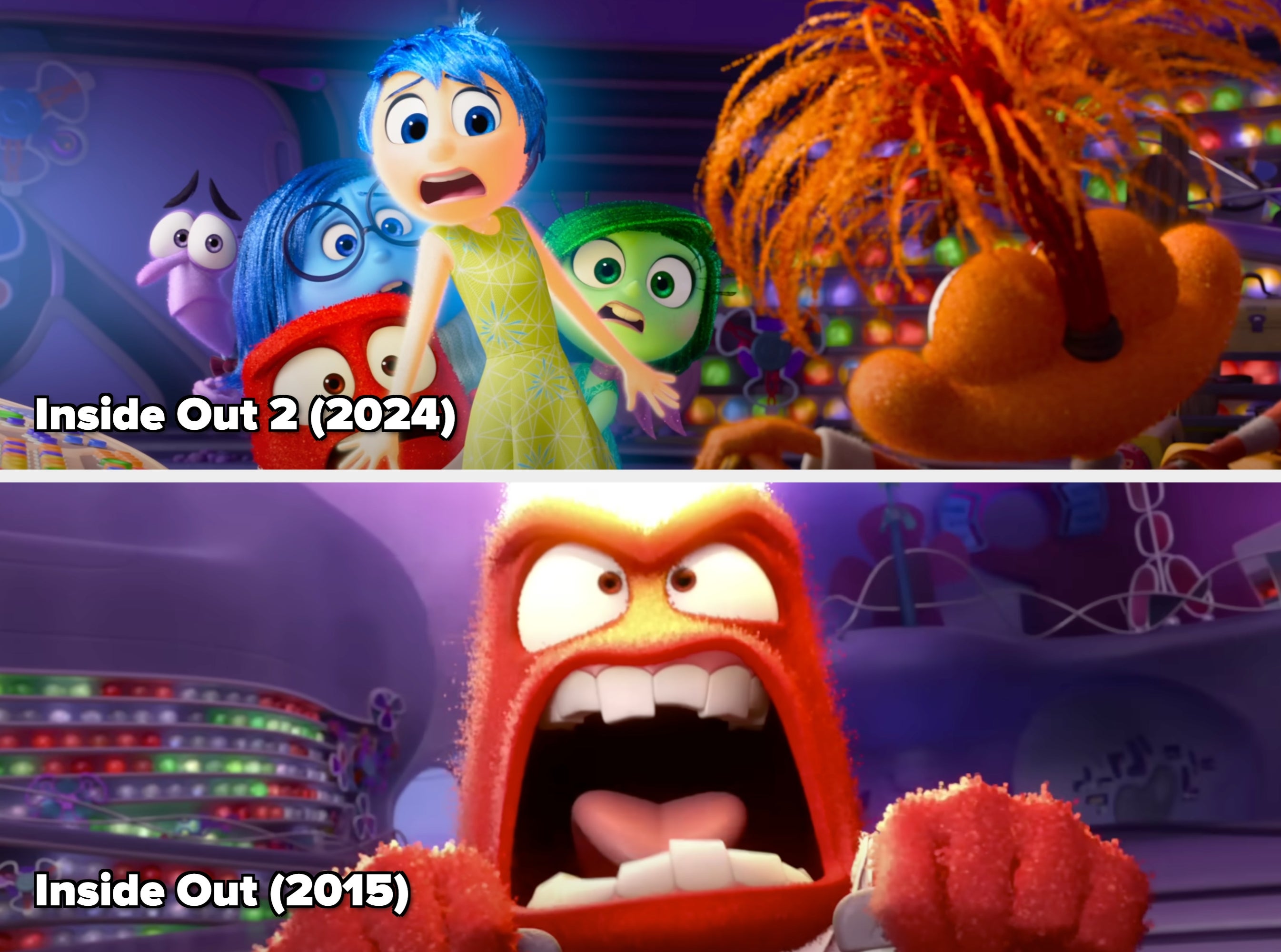
12. Inside Out 2 came out 9 years after the release of the first Inside Out back in 2015.
Pixar Animation Studios / Via youtube.com youtube.com
There wasn't actually ever a plan for a sequel to the first Inside Out that was released back in 2015. However, the director of the original film and Chief Creative Officer of Pixar, Pete Docter, approached director Kelsey Mann to begin development on a sequel years later. Mann spoke on the success of Inside Out, claiming "It wasn't intended to have this greater of an impact as it did. And I think over the years, that's just grown. That's probably where Pete [Docter] was like, 'You know what, there might be something else here that we could do'."
13. While not a direct sequel, the 11th installment of the Halloween franchise, Halloween (2018), is considered a new sequel to the original 1978 Halloween film (ignoring the other nine installments in front of it), bridging a 40-year gap between the two films.
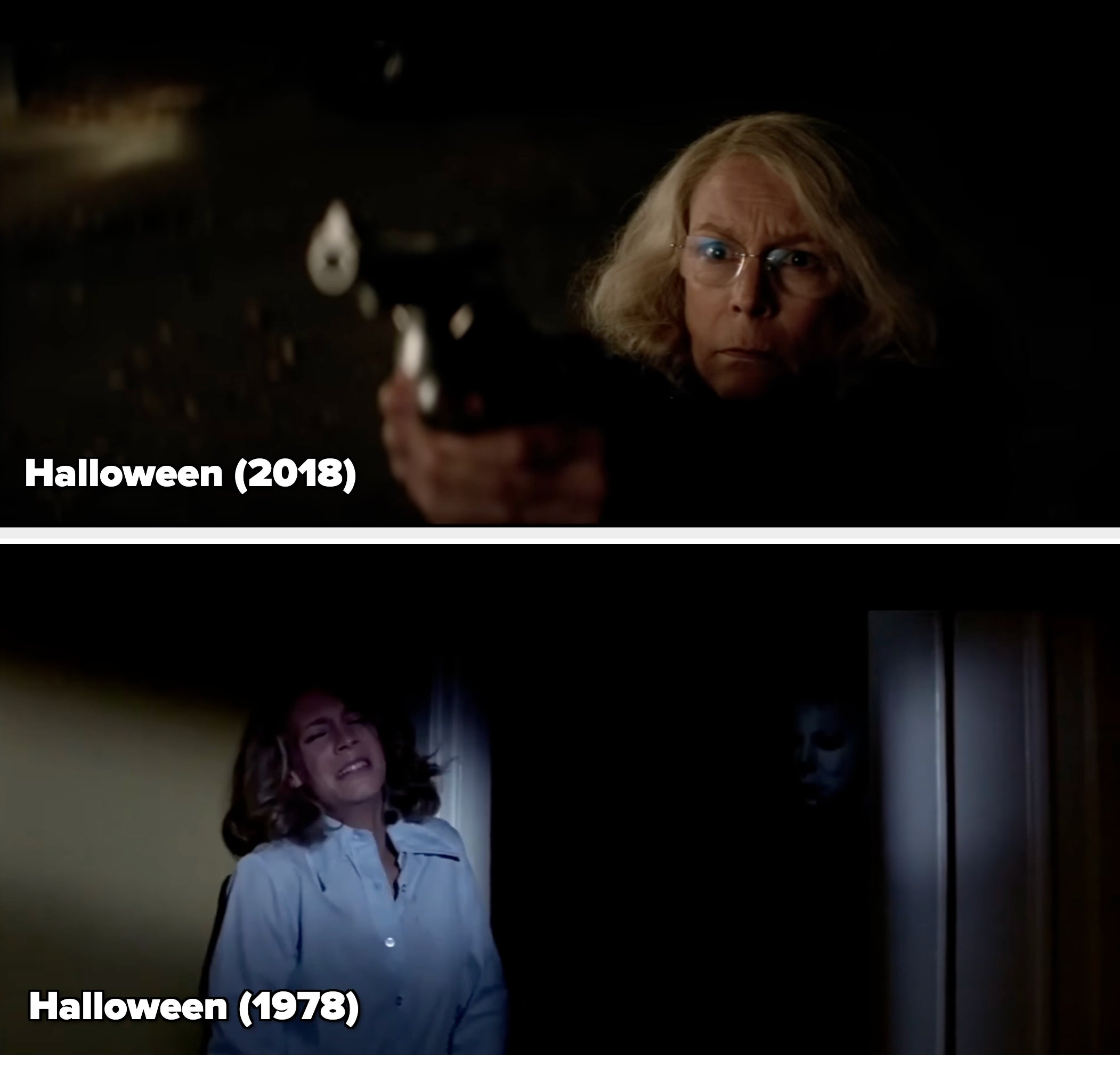
Blumhouse Productions / Via youtube.com
In 2018, director David Gordon Green made the decision to "start over" and essentially scrap the last nine installments of the Halloween franchise to make a "new" sequel to the original 1978 Halloween. Halloween (2018) is set 40 years after the massacre of the first film and picks up off the dynamics and story elements of the first film. Some fans loved the idea of starting fresh in the franchise as they believed it got out of hands at times, yet other fans weren't so pleased with the sudden, drastic changes. However, as being that Halloween (2018) is now considered the sequel to the 1978 classic, there's nearly 40 years between the two making of the films.
14. Doctor Sleep posed as a sequel to the 1980's classic film The Shining, making it a 39 year gap between the original and sequel.
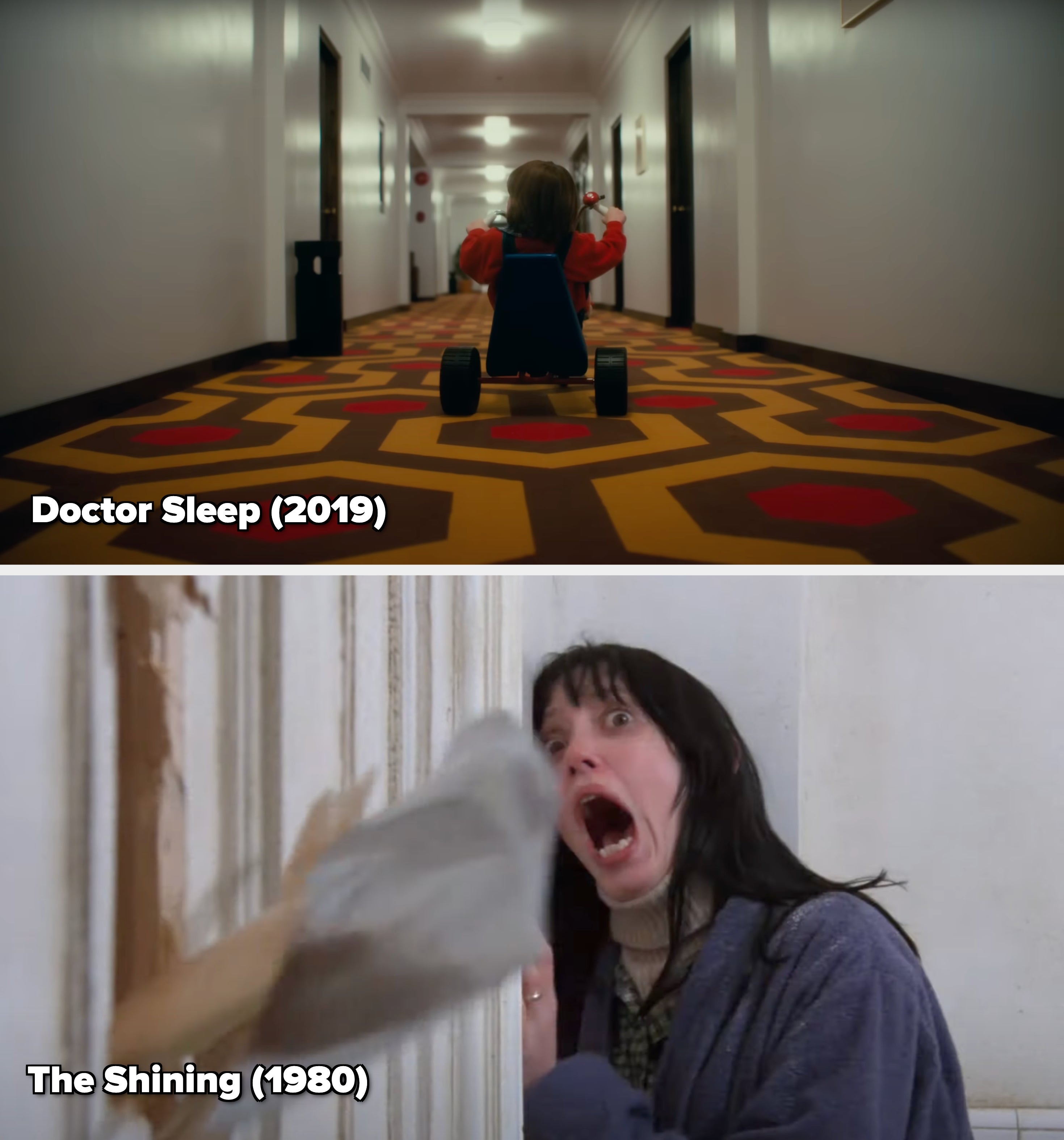
Warner Bros. / Via youtube.com youtube.com
Author Stephen King actually wrote the sequel to The Shining in 2013 titled Doctor Sleep, which hit shelves 36 years after the original. Shortly after publication, Warner Bros. began the development of the sequel, yet was faced with funding issues early on. However, upon the success of King's film adaptation It, funding was secured. Shortly after, Director Mike Flanagan hopped aboard and re-wrote the script, attempting to abide by the integrity of the book and the first film as well. This took significant time, and the film didn't start production until 2018. Yet, the sequel was eventually released in 2019, nearly 39 years after the making of the original film, The Shining.
15. Mamma Mia! Here We Go Again came out 10 years after the first Mamma Mia film.
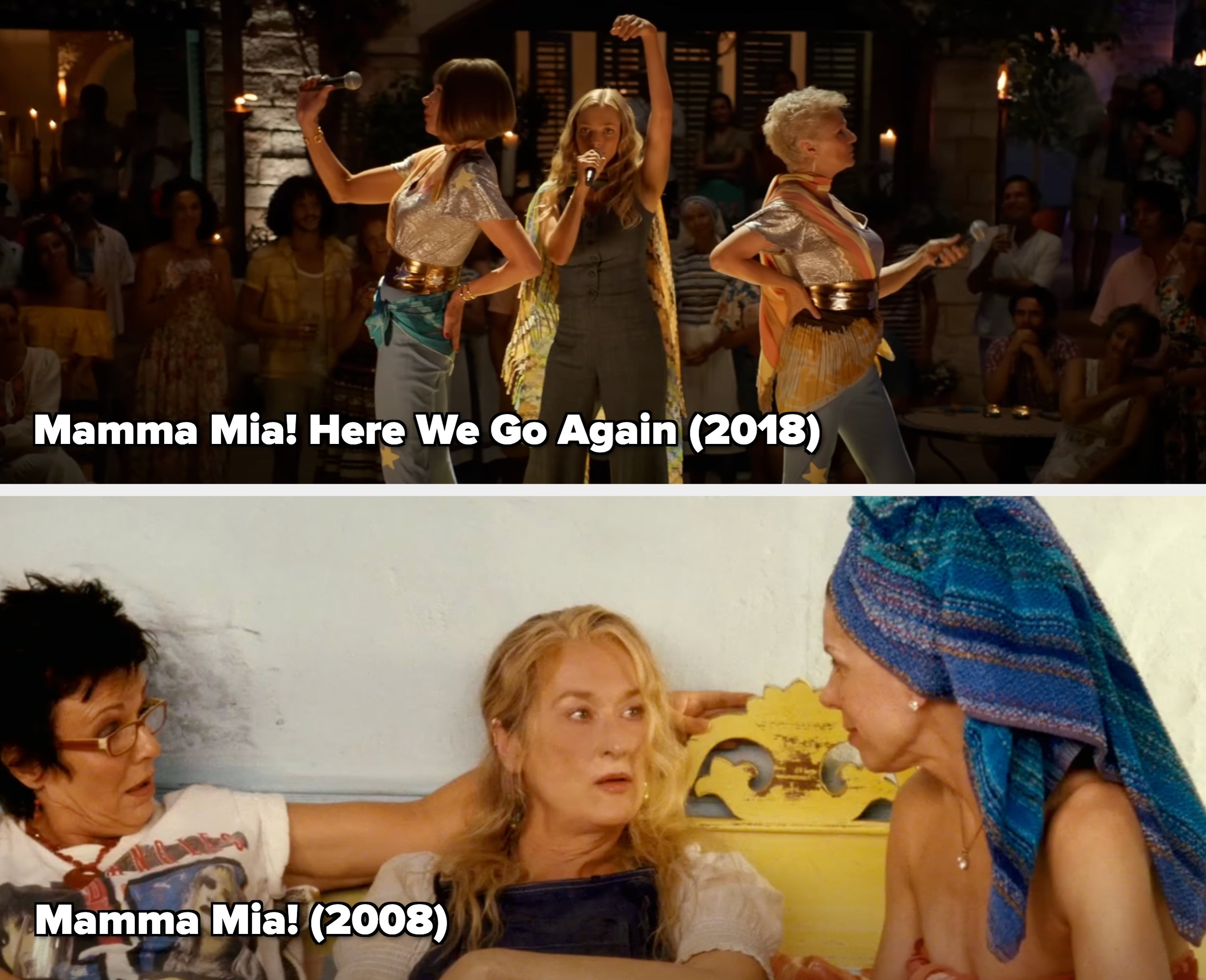
Universal Pictures / Via youtube.com youtube.com
Mamma Mia! Here We Go Again was released nearly 10 years following the original film and largely due to the fact that production didn't begin until late 2017, leading the film into a 2018 release. However, It's said the decade delay is due mostly to the considerable time spent developing the writing, casting, music, and the actual filming of the movie itself.
16. Tron: Legacy was made 28 years after the first Tron film was released back in 1982.
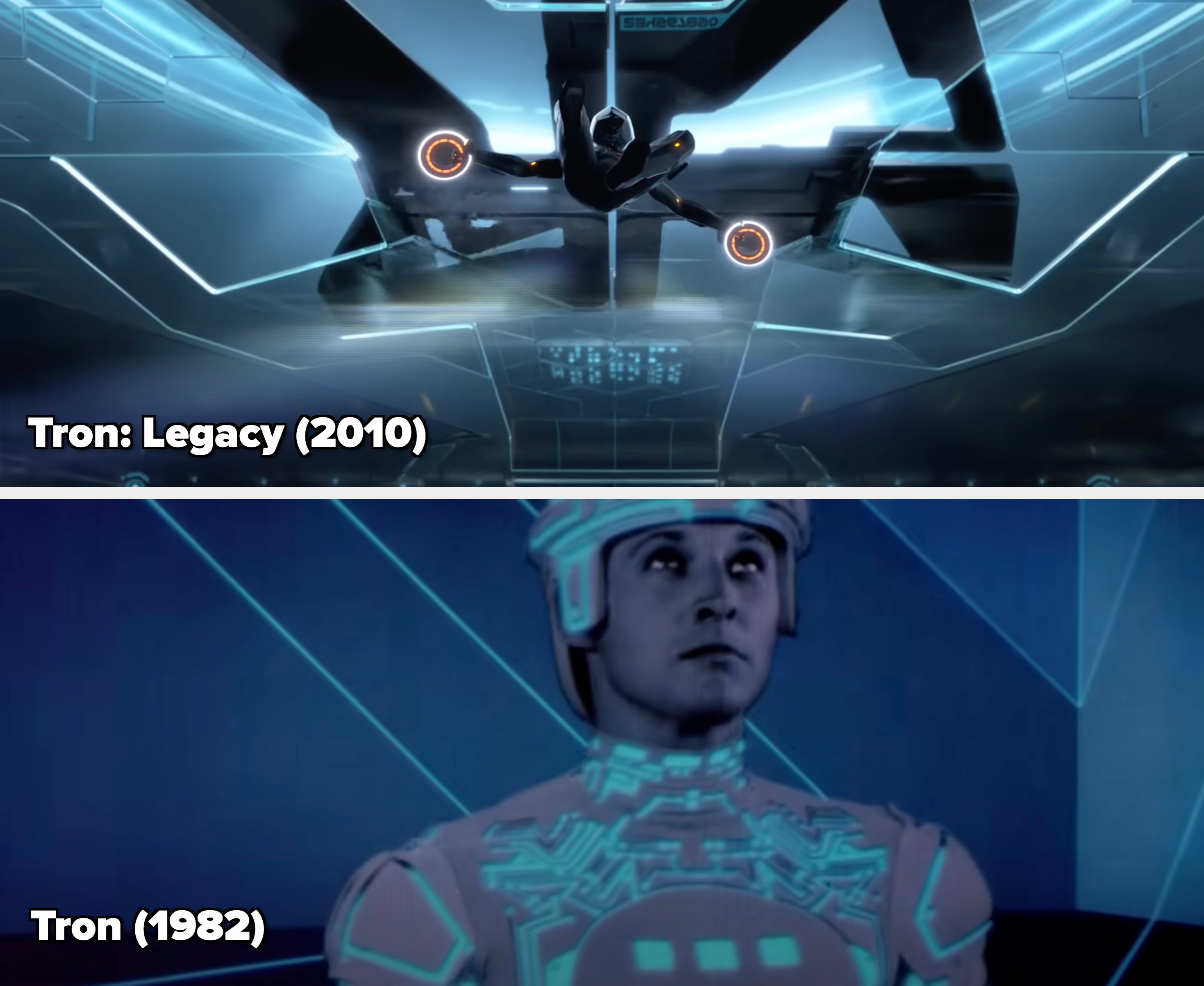
Walt Disney Pictures / Via youtube.com
There's not much that specifically suggests why it took almost 28 years to make the sequel to Tron other than the fact that Disney had other focuses and interests at the time. Disney had a tough time selling the appeal of Tron and found it underperforming in various ways, which made them shift from supporting the franchise altogether for quite some time. Yet, after 14 long years, Disney finally agreed to develop and release the sequel, Tron: Legacy.
17. And finally, Beetlejuice Beetlejuice was made a whopping 36 years after the first classic Beetlejuice film.
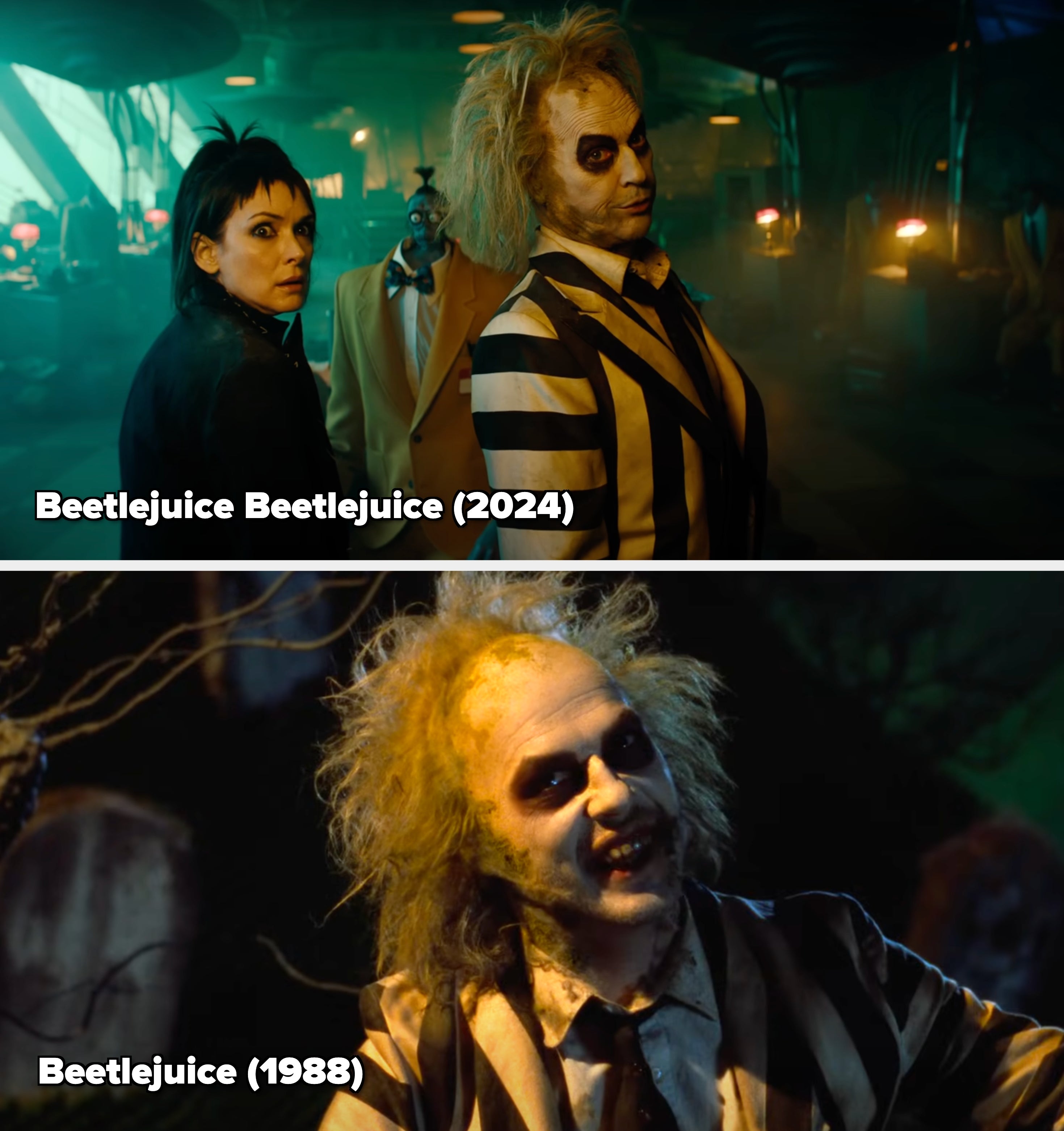
Warner Bros. / Via youtube.com youtube.com
Tim Burton shed light on why he took 36 years to make the sequel to cult-classic film, Beetlejuice, stating, "it just became a very personal movie, like a kind of weird family movie … that became the emotional hook. The three generations of mother, daughter, granddaughter, life, death —just basic, normal things that we all experience and then, especially if you’re lucky enough to get older, you feel those things. So that’s where it really started and it really could have only happened for me after all this time.” He shared how he felt he couldn't have made the sequel anytime sooner by adding, "Only time can show you your own experience in life. I couldn’t have made [Beetlejuice Beetlejuice] back in 1989 … now I feel things after 30 years of going through a bunch of good and bad ups and downs … it’s like when I made Big Fish. I couldn’t have made that film before my father died. I [could] only make that having those feelings that surprised me. So it’s the same as this."








 English (US)